“I've heard of SEO, but where should I start?” Don't you have that question?
SEO (search engine optimization) is an important measure that cannot be avoided when operating a website or blog.
In particular, 2026 is an age where “essential SEO measures” are required more than ever due to the evolution of AI and changes in user behavior.
In this article, what is SEO in the first place? I will explain everything from the basic idea to 7 specific measures that even beginners can implement starting today in an easy-to-understand manner.
If you want to work on SEO in the future, or if you are already using it but haven't produced any results, be sure to check it out.

SEO (Search Engine Optimization) means “search engine optimization” in Japanese, and refers to general measures to display one's own websites and articles at a higher level on search engines such as Google.
The purpose of taking SEO measures is to make it easier for search users to find your page and increase the number of accesses. In particular, the fact that the first page of search results is displayed at a higher level has a big impact on the click-through rate.
The basic idea of SEO is “providing useful information to users in an easy-to-understand manner.” Google is evolving its search algorithm year by year, and pages that are simply packed with keywords or copy content from other sites are no longer evaluated.
In order to create high-quality content, it is important to first understand “what keywords are the target users searching for and what kind of information they are looking for.”
Reference source:https://searchengineland.com/guide/what-is-seo
So how do search engines find web pages and then display them in evaluation/search results?
Basically, the search engine works by loading content in each of the following steps.
“Crawl (Crawl)” → “Indexing (Indexing)” → “Ranking (Ranking)”
An automatic program called a “crawler” of search engines circulates web pages on the internet, collects information, and then stores (indexes) the collected information in a search engine database.
When a user searches for a keyword, the pages determined to be the most relevant and match the search intent are displayed at the top of the indexed pages. This is the “search order.”
Therefore, if the page is too complicated to be read by the crawler, the content is duplicated, or it is determined that the reliability is low, it may be difficult to be displayed in search results.
Along with the recent evolution of AI technology, the search experience itself is changing drastically.
What is particularly noteworthy is that the number of cases where “optimal answers” are directly generated and displayed in response to user questions by generative AI (example: Google's Search Generative Experience, ChatGPT, etc.) has increased.
Due to this movement, it is also anticipated that users will no longer need to click on links and walk across multiple sites. In other words, the meaning of “displayed in search results” itself is changing.
For example, content design that makes it easy for both AI and users to determine that “this information can be used,” such as dissemination of primary information (example: original research and experience stories) and the uniqueness and expertise of content, is more important than ever.
In other words, an era has come where it is necessary to be aware not only of “search engine optimization” but also of “AIO (AI optimization).”
Reference article:What are AIO countermeasures? Introducing the merits and demerits, and things to keep in mind when taking countermeasures
SEO measures are broadly divided into 3 categories: “internal measures,” “external measures,” and “content SEO.”
SEO results are maximized by working on each policy in a well-balanced manner, not just one of them.
Internal countermeasures are measures to make it easier for search engines to correctly recognize and evaluate by optimizing the structure and settings of one's own website.
In SEO, it can be said that it is a work that lays the foundation, and it is an important element that affects SEO results.
Below is a list of typical internal measures.
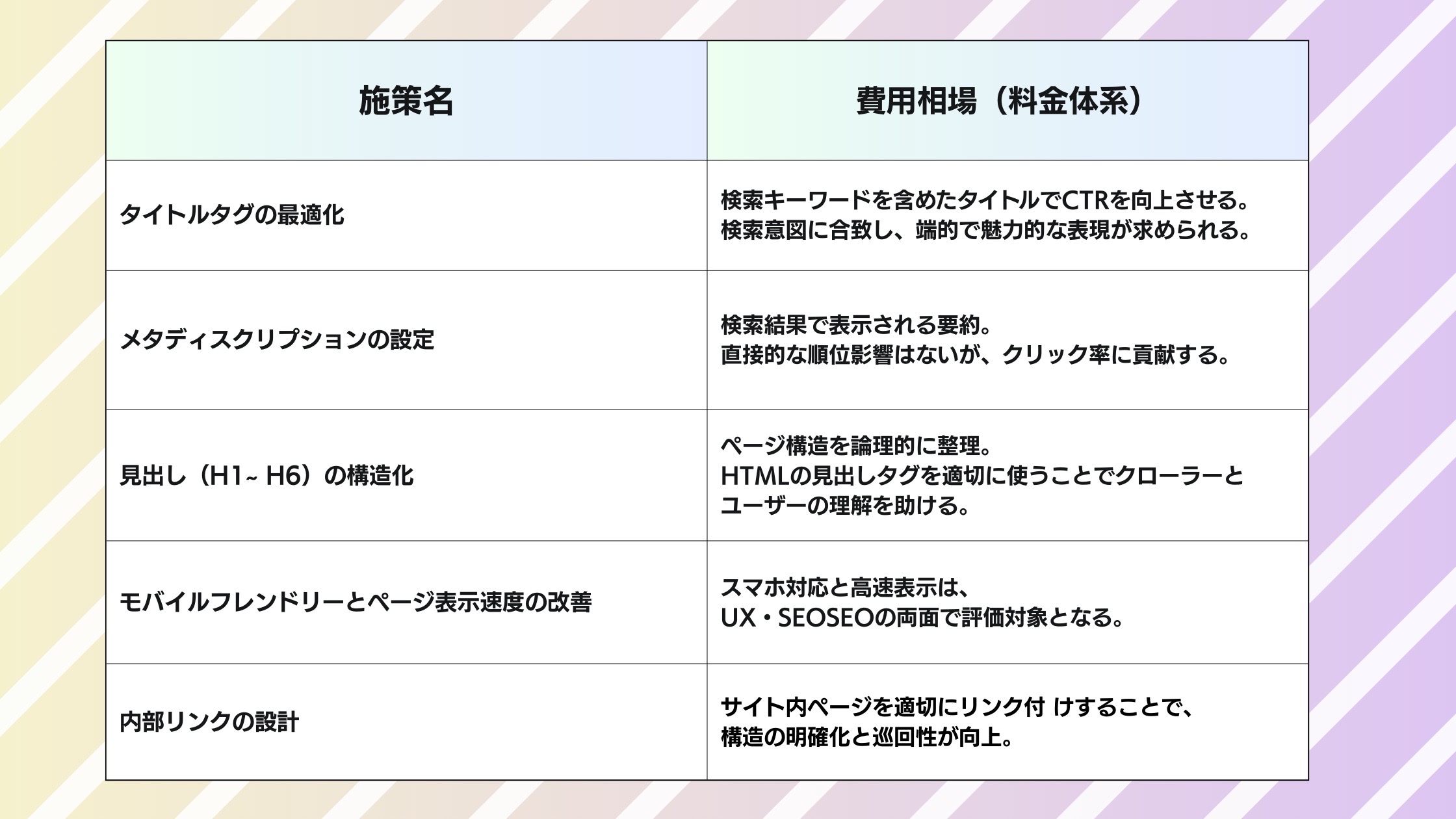
Internal measures can also be called “basic construction” of SEO.
Preparing the prerequisites for search engines to correctly evaluate content and at the same time making it possible for users to browse comfortably will lead to an increase in the final evaluation.
External measures are measures to build “external trust,” in other words, how websites are evaluated by other sites and users.
Search engines regard external evaluations as “proof of popularity,” and they have a big impact on search rankings.
The following are the details of the main external measures.
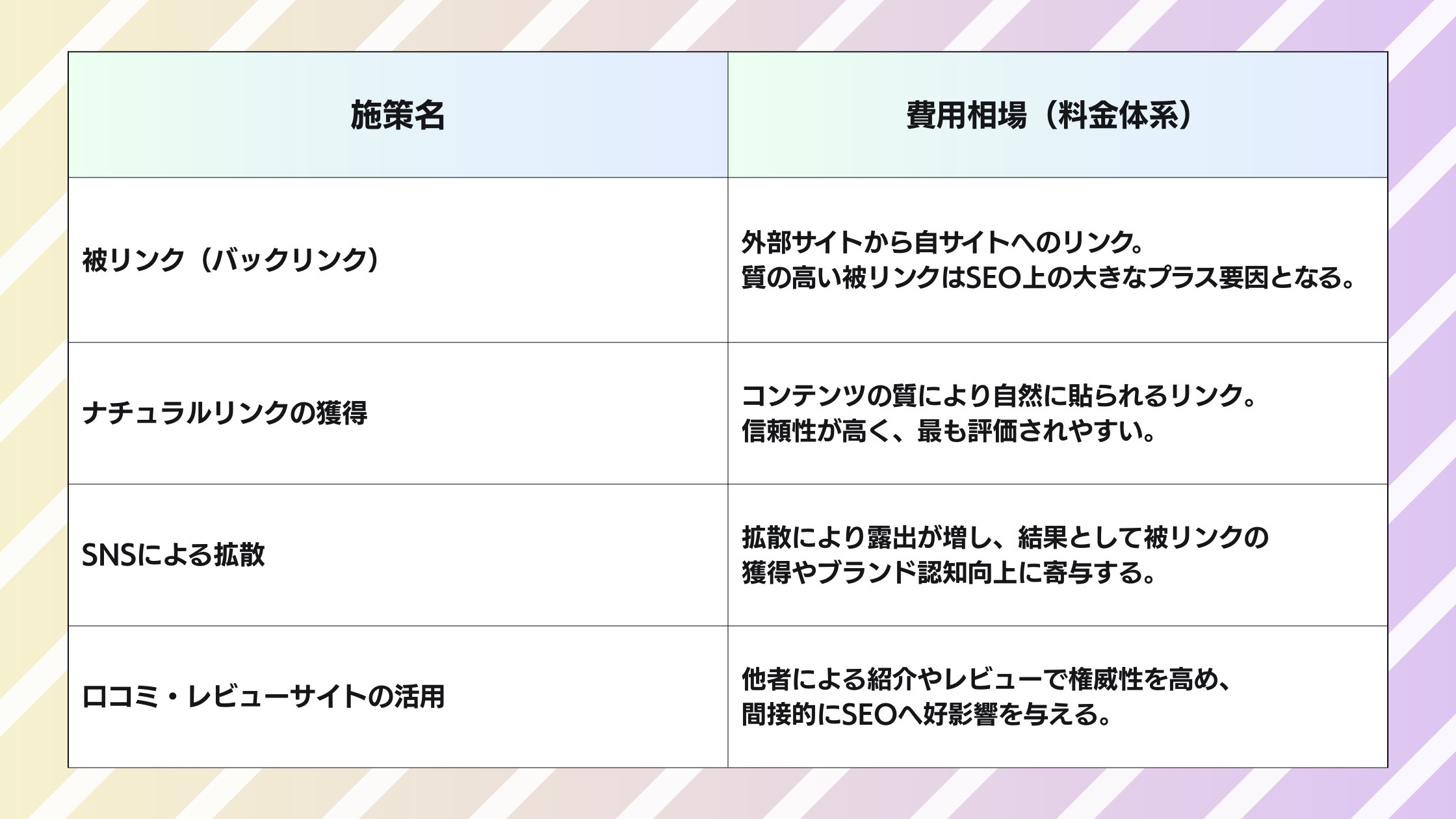
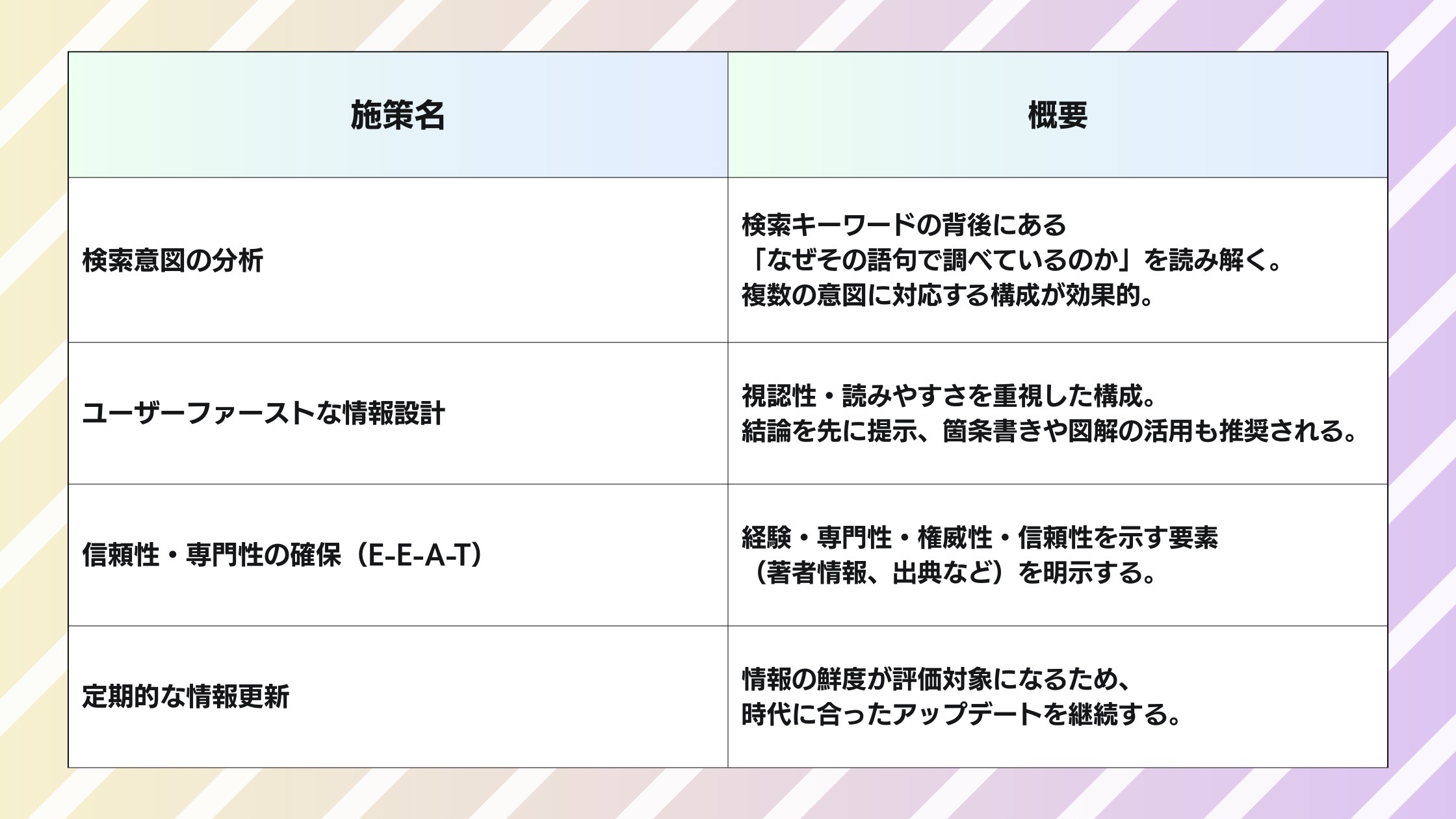
Content SEO is a policy aimed at “providing information requested by users with an appropriate structure and expression.”
With the evolution of search engines, emphasis is placed on whether an “optimal answer” to search intent can be presented rather than simply a list of keywords.
The following are typical content SEO measures.
Reference article:[2026 Edition] What is content SEO? Introducing popular methods based on merits and demerits
SEO measures don't take effect overnight.
In particular, when working with a straight forward approach (white hat SEO), it is necessary to know that it takes a certain amount of time and continuous effort to be evaluated by search engines and changes appear in search rankings.
Here, I will explain the general guidelines for SEO to be effective and the risks to be aware of.
Generally, the approximate period until the effects of SEO measures are reflected in search results is about 3 to 6 months. However, this is just an average case,
It also changes depending on it.
For example, if it is a site that already has a strong domain and has gained a certain level of credibility, changes may appear relatively quickly. On the other hand, in new sites that have just been launched or in high-reliability genres such as healthcare/finance/law called YMYL (Your Money or Your Life), search engines carefully evaluate them, so it may take 6 months to 1 year or more for results to come out.
Also, SEO is not complete with a single policy, and long-term and comprehensive operation such as improving and adding content and accumulating external evaluations is necessary.
Therefore, it is important to have an attitude of working from a long-term perspective rather than being impatient if “rankings do not rise soon.”
There are cases where people try their hand at black hat SEO that violates search engine guidelines because they want to quickly produce SEO results.
[Black hat SEO example]
There are times when it seems that search rankings will temporarily rise, but Google is improving its algorithm year by year, and such fraudulent methods are quickly detected, and there is a very high possibility that you will receive a penalty (drastic drop in search ranking or index deletion).
If you get penalized even once, it takes a lot of time and effort to restore trust in that domain.
In other words, black hat SEO aimed at short-term results is a method with a high risk of causing medium- to long-term losses, and it can also be an act that impairs business reliability.
The cost of SEO measures varies greatly depending on the size of the site, operation system, and the requesting contractor. While it is said that “there are things that can be done for free,” it is common for a certain amount of cost to work on it in earnest.
Here, let's check the cost perception for each typical case and the difference in costs associated with outsourcing/in-house operation.
The sense of cost of SEO fluctuates greatly depending on “who does it, on what scale, and how far.” When individual blog management and large companies strategically develop SEO, the necessary measures and man-hours are completely different, so of course the budget will also be different.
Below is a table summarizing the differences between general cost estimates and policy details.
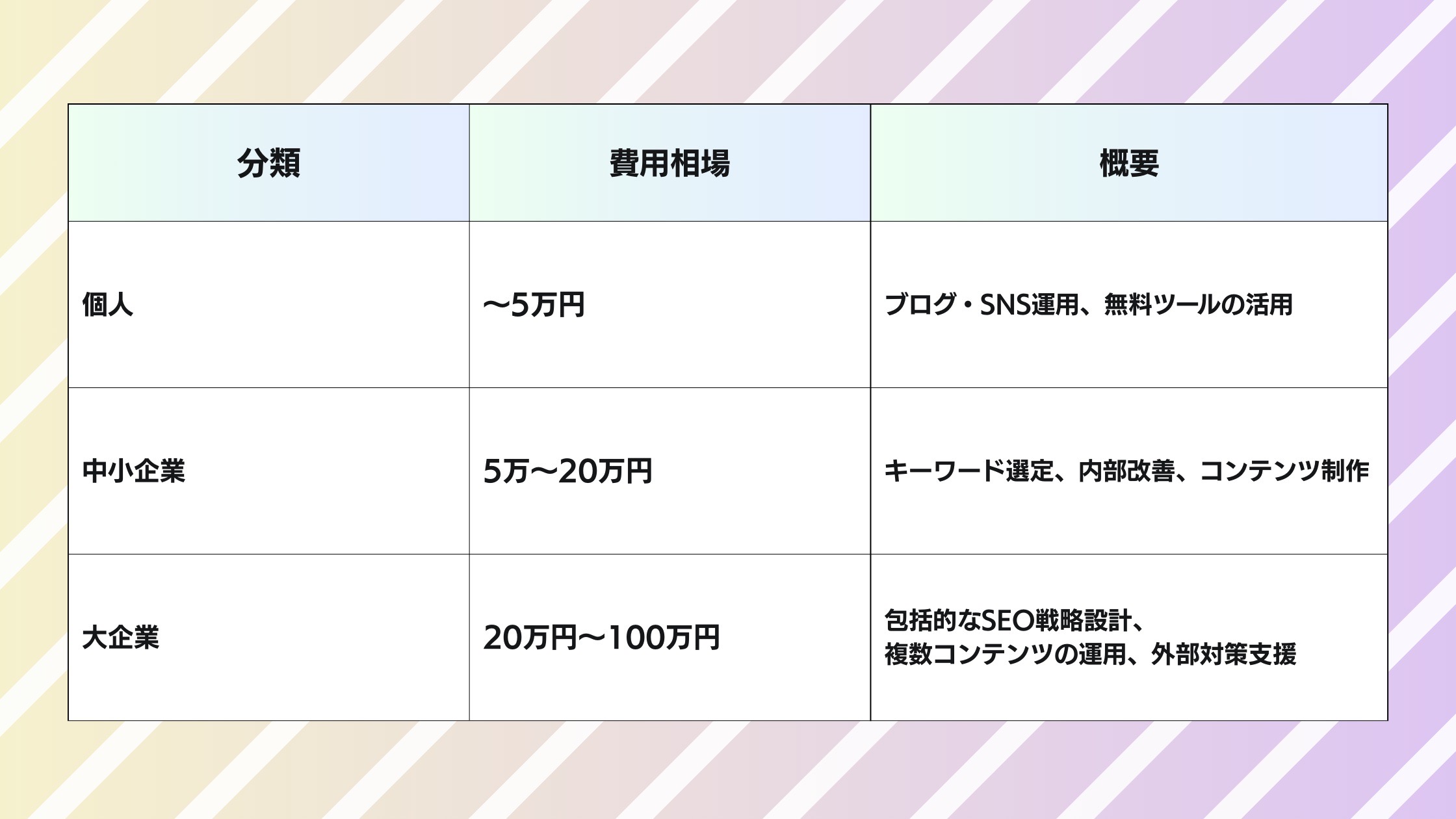
Basically, SEO on an individual level is generally done by oneself, and measures are promoted at low cost by making full use of free tools and SNS operations.
Meanwhile, when it comes to small and medium-sized enterprises, there are an increasing number of cases where requests are made to specialized contractors for about 50,000 to 200,000 yen per month in order to achieve a certain level of results.
Furthermore, when it comes to large enterprises and nationwide services, they often receive consistent support from strategy planning to operation and reporting, and it is not uncommon for budgets of hundreds of thousands of yen to over 1 million yen are invested per month.
There are two methods for SEO: outsourcing (outsourcing to a contractor) and a method of operating with in-house resources.
Since the cost structure and required resources for each are different, it is necessary to make decisions according to the business phase and human resource situation.
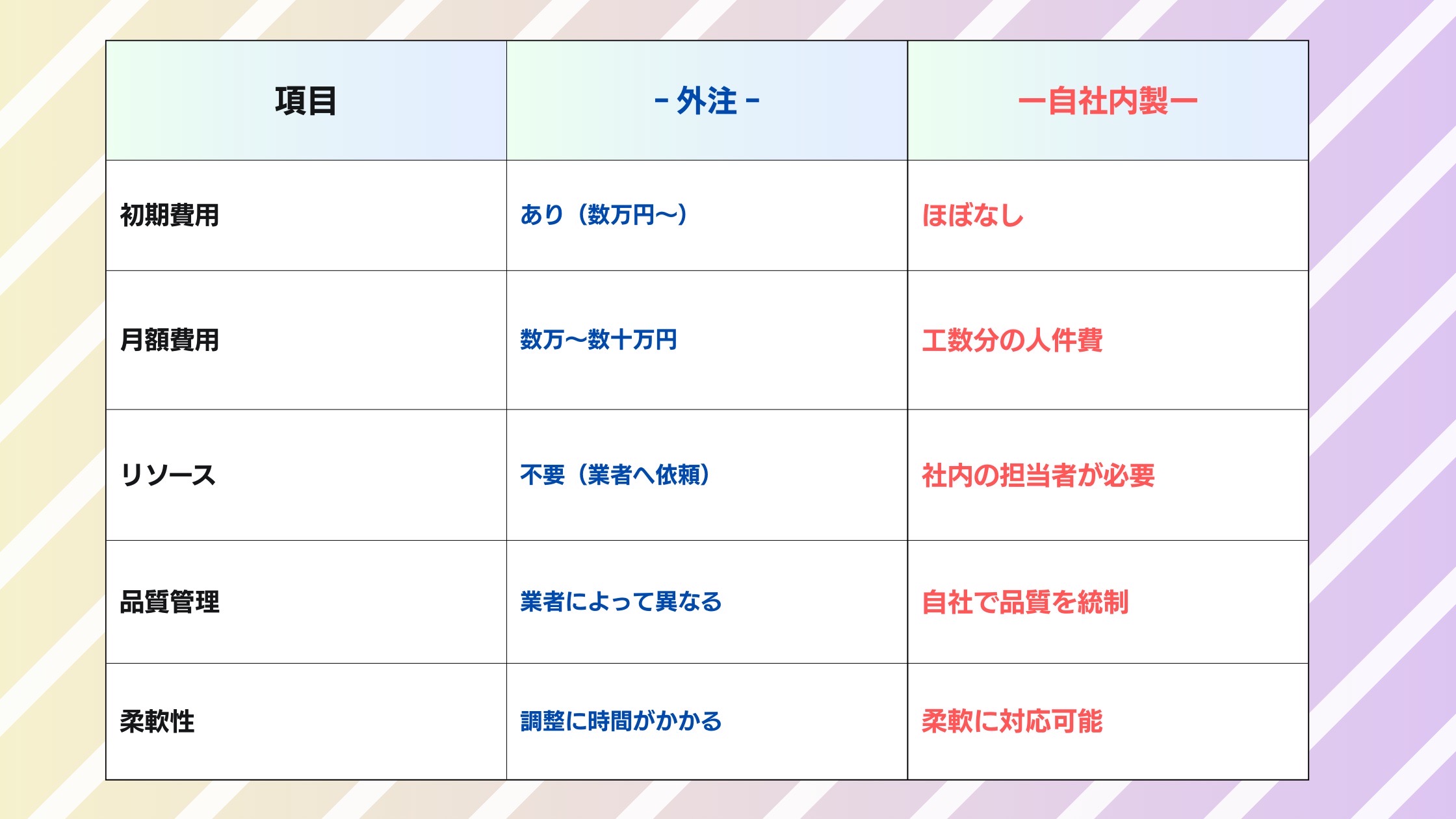
In the case of outsourcing, initial costs and monthly costs are incurred, but since they are left to staff with specialized knowledge, certain results can be expected even if the company does not have SEO knowledge. However, there is also a risk that if you do not pay attention to selecting traders, you will only be able to obtain quality or results that are not commensurate with the cost.
On the other hand, although in-house operations are relatively low in terms of cost, it is necessary to secure human resources with SEO skills within the company. Also, while resource allocation is flexible, it can also take time to achieve results.
Before starting SEO, the first thing you should work on is “advance preparation.”
Even if you write articles or stuff keywords into dark clouds, your search rankings won't increase. In order to achieve results, the first step is to set the right direction and lay a firm foundation.
The first thing you should do is “clarify your target audience.”
Let's concretely imagine who the information will be sent to, and what kind of concerns and needs they have. By clarifying the target, there will be no blurring in keyword selection and content content.
Next, we will conduct keyword and genre research, so-called search market research. We investigate what words users are searching for and find keywords suitable for our content.
If you use free tools (Google keyword planner, otter keywords, Ahrefs, etc.), it will be easier to grasp search volume and related words.
Also, don't forget about “competitor research.” By checking what kind of structure, content, and tone of articles are written on the sites that are displayed at the top, you can see elements that are lacking in your own site and, conversely, points that can be differentiated.
Also, when competition is strong and competition is fierce, it can be assumed that it will take some time to be displayed above, so it is also an indicator of how long it will take for SEO effects to appear.

From here on, I will explain 7 basic SEO measures that beginners should actually do right now.
The starting point of SEO starts with keyword selection. First, let's clarify the “target” and “genre” of the information or service you want to deliver, and then research the keywords that users actually search for.
At this time, it is effective not to suddenly target big keywords with many competitors, but to target keywords with clear search intentions in a niche.
Also, it is important to analyze the content of competitor sites that are displayed at the top with that keyword and grasp the minimum content (structure, headings, depth of information) that should be kept in check.
Compared to competitors
Let's check the consistency between the keyword and the article from that point of view.
What can be said to be the most important thing in creating SEO content is optimizing title tags and headings (H tags).
In particular, the title tag is an element that has a strong influence on Google's crawlers in grasping page content, and it is directly linked to the user's click-through rate. While naturally including the keyword you're aiming for in the title, try to use attractive expressions that make you want to click.
Heading tags (h1, h2, h3, etc.) are also logically structured, making them both easy to read and easy for search engines to understand.
Also, don't forget to set the meta description. Since it is displayed as an explanatory text in search results, it is an important element that attracts user interest and encourages clicks.
Designing a “site structure” that is easy for both users and Google to understand is also essential in SEO.
By arranging things like that, not only is it easier for users to understand, but it also makes it easier for Google crawlers to correctly patrol and understand information. This leads to an improvement in “crawlability (ease of crawler patrolling)”.
Also, be aware of the lead line from article to article, and carefully design internal links so that they naturally lead to the information readers are likely to be looking for next.
In particular, if you include related keywords in anchor text, it will also be more effective in terms of SEO. If you use specific keywords that match the context rather than just “here” or “this article,” it will be easier for the content to be conveyed to search engines.
The majority of current search traffic is via smartphones, and Google has also adopted a “mobile-first index.”
Therefore, there is a high risk that search rankings will drop for sites that are difficult to view on smartphones. If the text is too small or images or buttons stick out of the screen, it is inconvenient for users and causes evaluations to drop.
To confirm mobile compatibility, it is also convenient to use a verification tool or the like that comes standard with a PC browser, but when determining an accurate feeling of use, it is a good idea to check with an actual smartphone.
Basically, we recommend adopting a “responsive design” where the layout automatically changes according to the screen size.
Pages that load slowly make it easier for users to leave midway, which also has a negative impact on SEO ratings.
Lines can be unstable, especially in mobile environments, and slow display speeds lead to fatal loss of opportunity.
If you want to know how fast pages are displayed on your site or on your client's website,
Provided by Google to usersPageSpeed InsightLet's use a tool called.
t
As for the points of improvement,
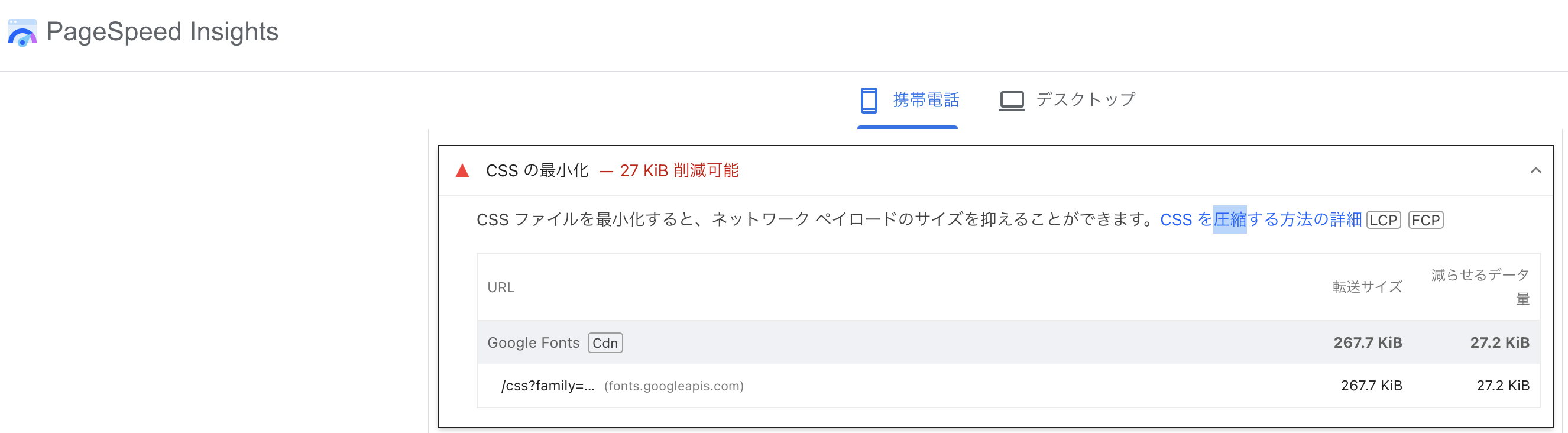
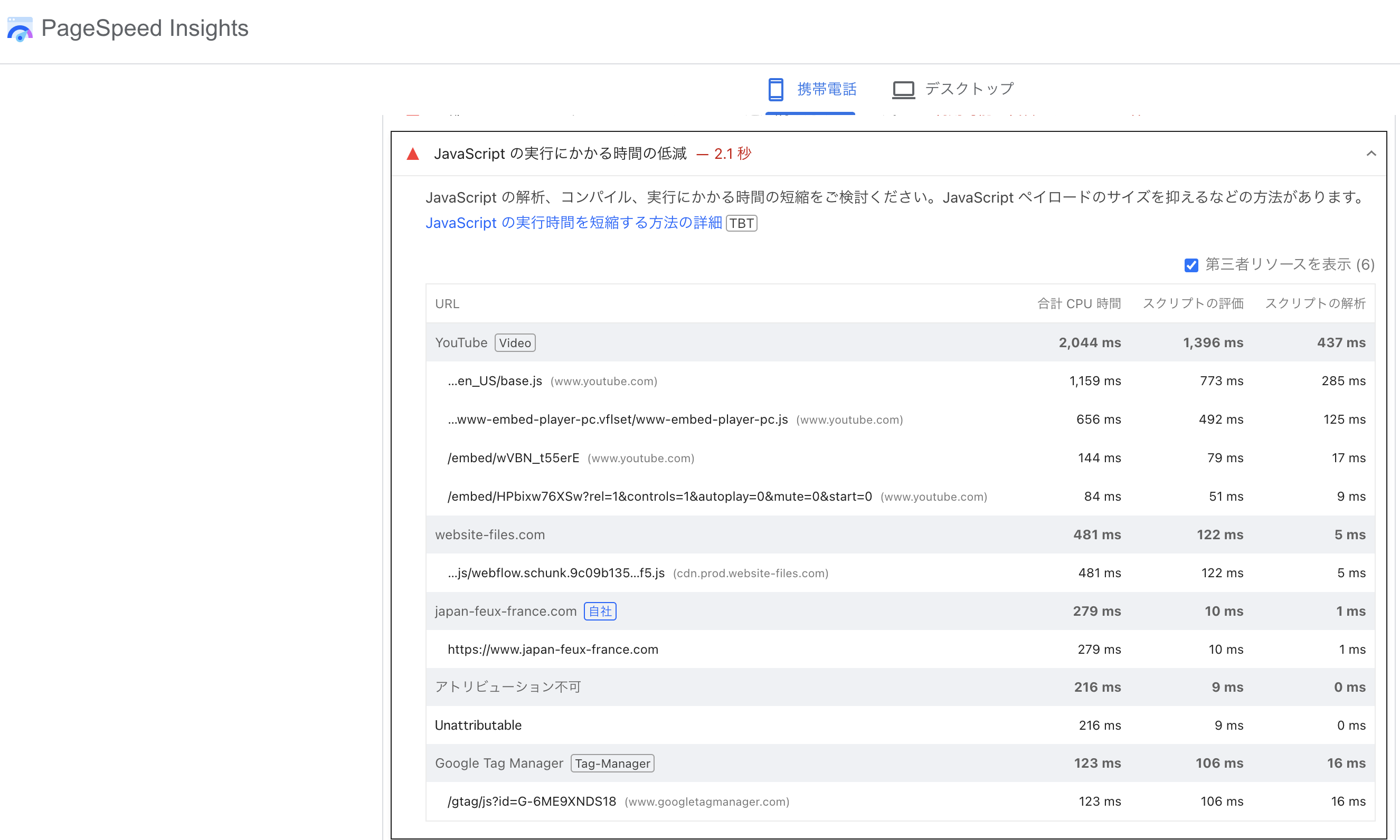
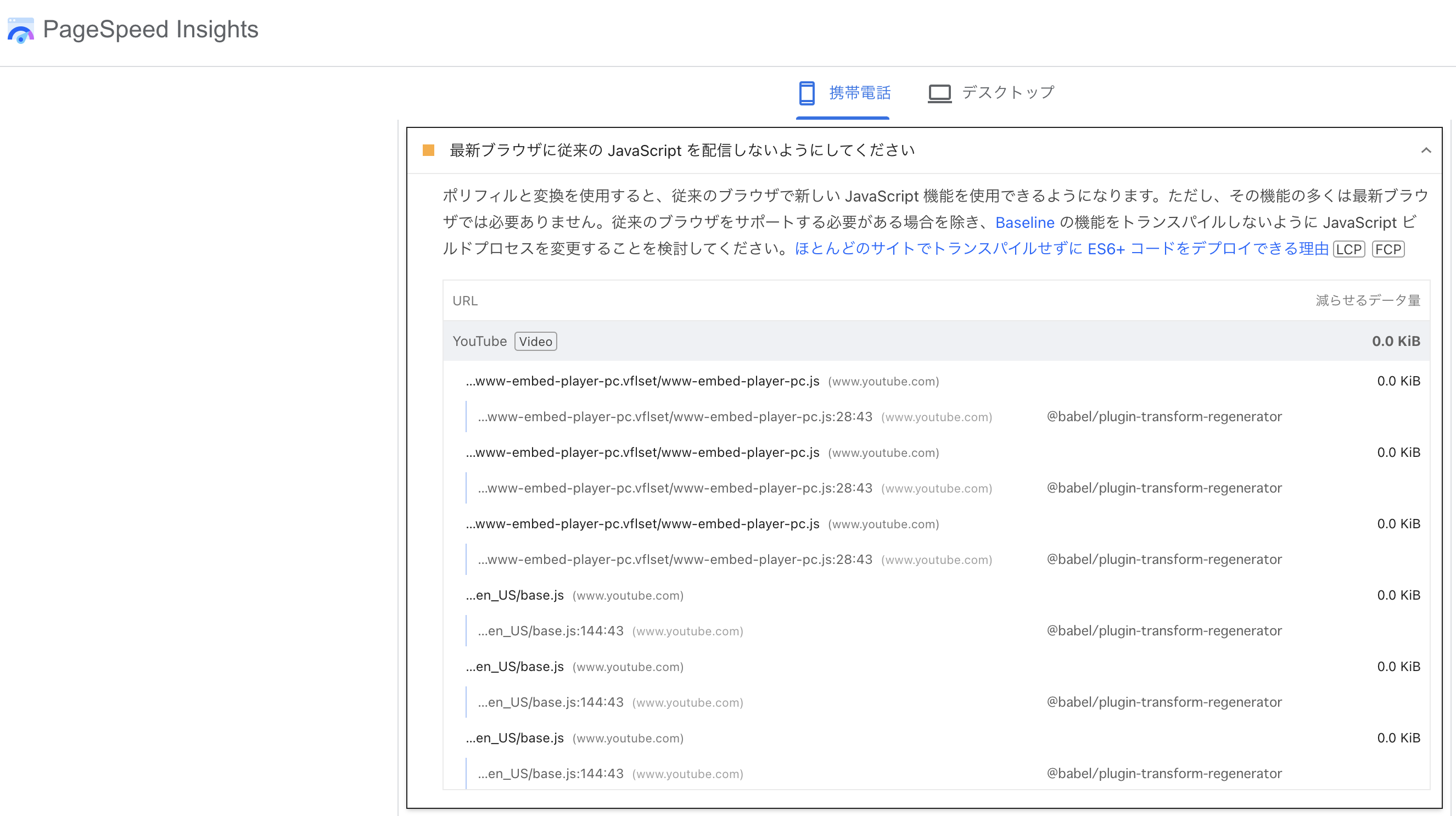
There are such things.
There are also survey results showing that a delay of 1 second in page display speed greatly reduces conversion rates.
If you want to know specific improvements, use tools such as Google PageSpeed Insights and GTMetrix.
These tools not only score, but also suggest improvements.
No matter how much SEO techniques you use, the reality is that it is difficult to display the top if the content of the content is the same as the others.
Google appreciates pages that can deliver “unique value” to search users. In other words, content that not only summarizes information but also contains your own experiences, knowledge, and opinions is content that is evaluated by SEO.
Also, if the quality of each article is high, it will pile up and improve the overall evaluation of the site.
While being aware of E-E-A-T (experience, expertise, authority, reliability), let's aim for articles that make people think “this information cannot be read anywhere else.”
SEO is not “done once and done,” and it is a long-term game that requires continuous improvement and adjustment.
Search results change daily, and user needs change over time and time. Furthermore, it is not uncommon for articles that have been at the top until now to suddenly drop in rankings due to the entry of competitors or updates to the Google algorithm.
That's why, after publishing the article,
It is important to check such data regularly.
If you use free tools such as Google Search Console or Google Analytics, you can see which keywords are generating traffic and which pages are performing.
Also, don't leave pages that have dropped in rankings, and take measures such as rewriting content and updating information to the latest one.
By improving it so that it matches the user's search intent, there is a good possibility that it will return to the top position again.
It is no exaggeration to say that “improvements after publication are real” in SEO. It takes time for results to come out, but by steadily accumulating improvements, it should grow into a highly reliable site.
Links (backlinks) from external sites are an important indicator for evaluating the reliability and authority of content. Pages linked from many good sites are regarded as “valuable information supported by others,” making it easier to be displayed at the top.
First of all, link acquisition actions that are easy for beginners to work on include posting on SNS and requesting comments/referrals to other people's blogs.
Also, by posting your own knowledge and experiences as specialized articles, you can expect to acquire “natural links” that will naturally be introduced to others.
However, unnatural methods such as “buying” backlinks violate Google guidelines and there is a risk of being penalized. Steady delivery of “high-quality information that you want to introduce to others” is the essence of link acquisition.
Search engines determine not only the presence or absence of a keyword, but also the theme and expertise of the entire sentence using words (co-occurring words) and related words around it.
For example, if it is a keyword called “SEO,” “search ranking,” “Google,” “keyword selection,” and “backlink,” etc. frequently appear as related words and co-occurring words.
By incorporating these words into the article in a natural context, it is possible to convey to search engines that “this page is written in depth about a specific subject,” leading to an increase in SEO evaluations.
For beginners, it's easy and recommended to search for related terms using sea otter keywords or Google suggestions. However, it is important not to force it to be packed, but to use it in sentences that are natural to the user.
A site map is like a guide map listing the structure of a website. What is a sitemap for SEO
There are 2 of them.
An XML sitemap is a file that tells search engines such as Google that “this site has pages like this,” and supports crawlers so that they can efficiently patrol and index pages. It is especially effective on sites with a large number of pages or when there are many newly created pages.
On the other hand, HTML sitemaps are viewed by humans, making it easier for users to reach the target page, leading to an improvement in user experience (UX). This also leads to an indirect increase in SEO evaluations.
If you are using WordPress, you can easily install it by using plug-ins such as “XML Sitemap Generator” or “Yoast SEO.”
In order to simultaneously increase crawler efficiency and user convenience, let's prepare a site map at an early stage.
What you should know before tackling SEO is its “advantages” and “disadvantages.” Just as there are positive aspects and caveats to any policy, SEO is suitable and unsuitable.
Especially for those who are thinking about attracting customers over the medium to long term, make sure you understand it correctly.
Once displayed at the top, continuous access can be expected without incurring advertising costs, which is a major appeal. If you get it right, it will be like an “asset” where prospective users gather automatically 24 hours a day, 365 days a year.
Being displayed at the top of search results also increases trust from users. It can give the impression that “found by search = proper source of information,” and branding effects can also be expected.
Since you don't incur a cost per click like a paid ad, it's very cost-effective in the long run.
Especially for small to medium site operators, it is effective as a means to attract customers without relying on advertisements.
Users coming in through SEO are in a state of “actively searching for information.”
Therefore, it is easy to lead to product purchases, document requests, etc., and the conversion rate is also likely to increase.
Reference source:https://digitalmarketinginstitute.com/blog/what-is-seo-and-why-is-it-important
SEO doesn't work right away. It may take weeks to months from when countermeasures are taken until results are obtained.
If you are looking for results in a short period of time, you will need to use it in combination with other means of attracting customers.
Google's search algorithm is constantly being updated, and rankings may change as a result. Especially in big updates, there are many cases where articles that were displayed at the top suddenly drop in rank.
SEO is not “made once and done,” and it is necessary to constantly update and improve articles while observing users' search intentions and competitor movements.
It takes time and effort, but it is also a “room for growth” for SEO.
In genres with high search volume, competition from major sites and specialized media is fierce, and there are cases where it is difficult for beginners and small-scale sites to take the top positions.
Keyword selection and differentiation strategies will become more important.
Reference source:https://digitalcatalyst.in/blog/9-crucial-pros-and-cons-of-search-engine-optimization/
When it comes to tackling SEO, even if you continue to work while fumbling, the effects don't improve easily. This is where the use of SEO support tools comes in handy.
There are many tools that are easy to use, even for beginners, and are free or partially free. Here, we will introduce 3 representative tools that are particularly recommended for “those starting out with SEO.”
Google Search Console (search console)is an official tool provided free of charge by Google, and is an essential tool for understanding and improving site search performance. If you register a site, you can check in detail what keywords were searched for, how many times it was displayed, click rate (CTR), etc.
The features that beginners should pay particular attention to are “search performance” and “coverage (index status).” If you look here, you can see at a glance which pages are registered on search engines and whether there are pages that have not been reversed.
Also, when there is a problem, a warning from Google is also displayed, so it can be said that it is an essential tool for doing SEO.
Sea otter keywordsis a free Japanese-compatible tool that allows you to obtain words and suggested keywords related to search keywords in batches. For example, if you enter “diet,” a list of related keywords such as “diet method,” “diet meal,” and “diet exercise” will be displayed in a row.
By using this tool, “what users actually want to know” can be visualized, which is useful for creating content in line with search intentions.
It is very useful at the stage of selecting keywords and when considering article structure, and is perfect for beginners to get a sense of search volume. There are paid plans, but you can also take full advantage of the free version.
In SEO, duplicate content (copy content) is one of the factors that adversely affects search rankings.
Checking the originality of sentences is important not only when requesting an external writer, but also to prevent sentences from being unintentionally similar to other sites. That's where it comes in handy”copyContentDetectorIt's a free tool called”.
When you paste your manuscript into this tool and check it, the match rate with similar content existing on the web is displayed numerically.
In particular, when creating articles using an outsourced writer, or for articles with many reference sites, this is a highly important check process.
The cost of SEO measures varies greatly depending on what is being requested and the type of policy. Below are cost estimates for each of the main measures (*Please refer to them as guidelines).
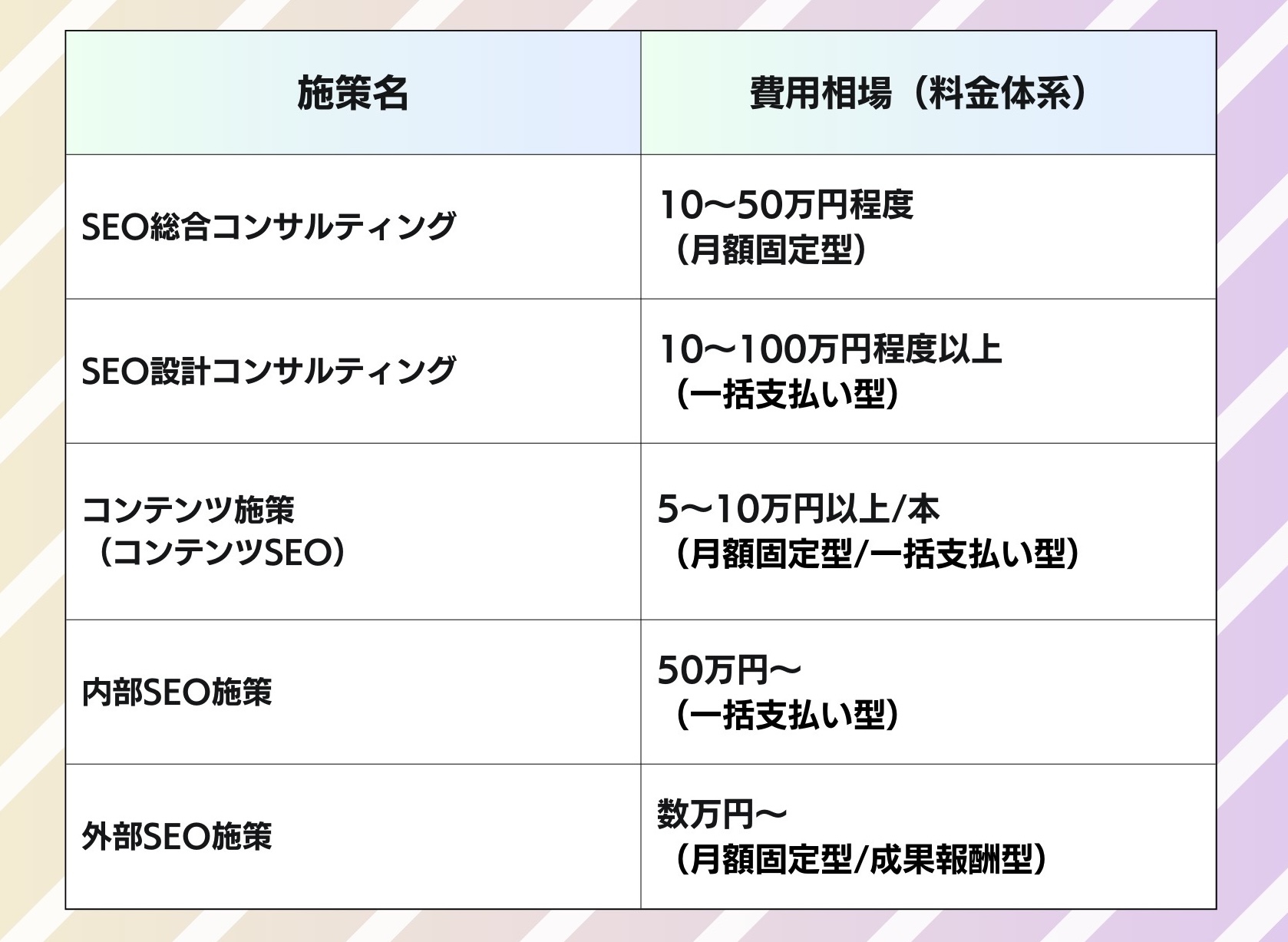
As you can see, there are spot requests for SEO measures, and there are also forms where long-term support is received, and there are various fee structures such as “fixed monthly payment,” “lump-sum payment,” and “performance reward type.”
Choose the most suitable plan based on the client's track record and how far your company can handle it.
SEO updates information quickly, so it's important to always check the latest information from reliable sources. Here are some particularly recommended references.
It is one of the most trusted news media in the overseas SEO industry.
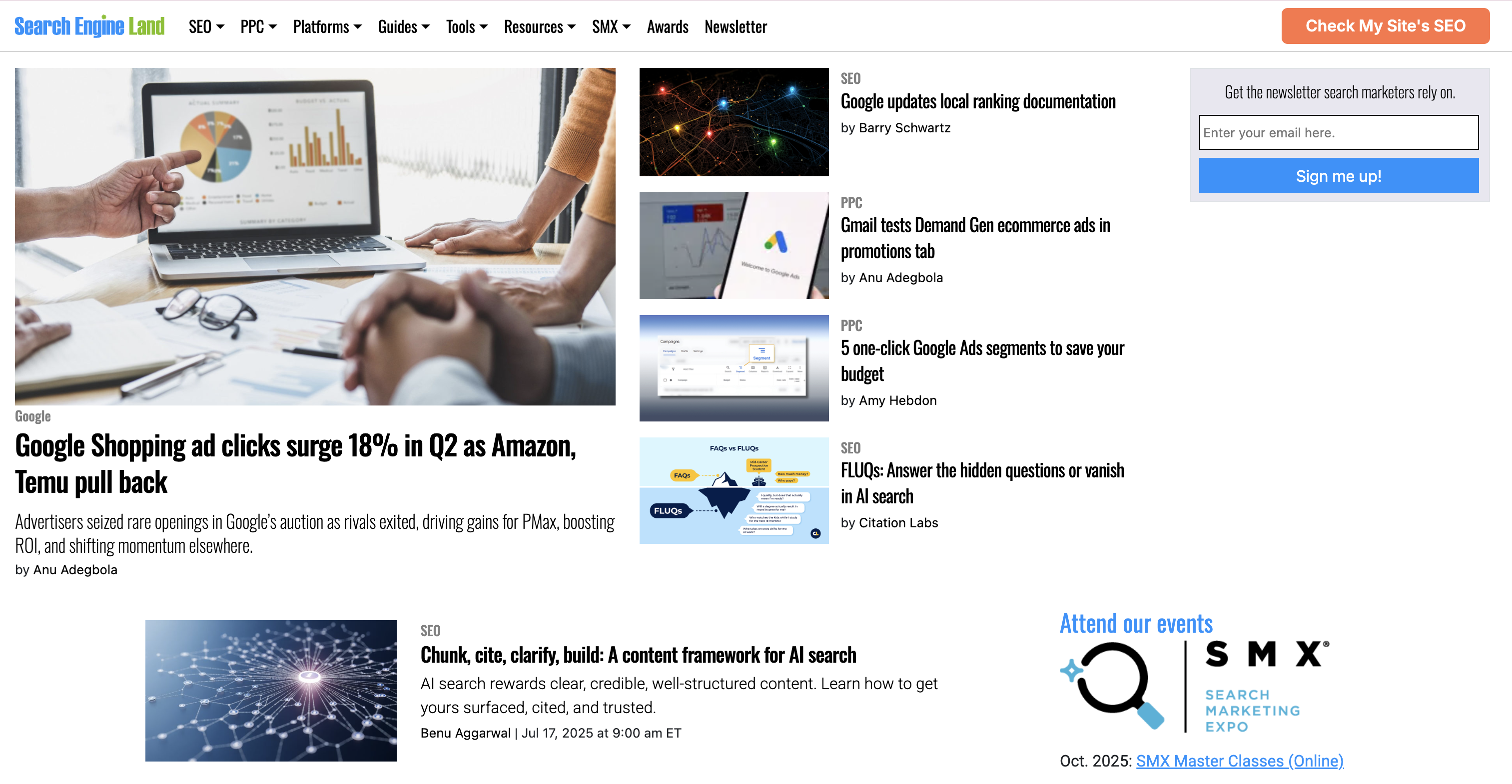
Reference source:Serchengineland
It covers a wide range of topics, including Google updates, the latest best practices, and expert opinions. It's in English, but it's a must-see site for those who want to quickly grasp the latest information.
John Muller (@JohnMu), who belongs to Google's search team, is known as the “living FAQ” of the SEO world.
Google's intentions and policies are directly transmitted, and it is an extremely reliable source of information within the industry.
Although it is in English, there are many specific answers and opinions, and it is loved by Japanese SEO personnel.

However, after 2024, it seems that there are many cases where it is not approved when following John Muller...

Reference source:John Muller's X
When working on SEO, the ability to determine “what to focus on within limited resources” is extremely important, especially in the case of individuals and small to medium enterprises.
There are many things you can do, but it's not enough time or effort if you try your hand at everything. The ability to prioritize implementation of measures that can really be expected to be effective affects SEO results.
Conversely, if time is spent only on measures that are unlikely to be effective, search rankings do not rise easily, and it is easy to fall into a situation where only costs are incurred without generating profit. This is directly linked to the decline in motivation of SEO personnel, and “does it really make sense?” It's not uncommon for people to become suspicious.
What is even more troublesome is that it is not clearly determined what kind of content or policy is the “correct answer.” Search engine algorithms are private, and they are evolving day by day. Therefore, “hypothetical thinking,” where hypotheses are formulated, executed, and repeated improvements while looking at results, is required.
Although it is steady work, it is this repetition of thought and trial that is the driving force for creating content and sites that are evaluated in search results over the long term.
The essence of SEO is “delivering valuable information to users,” and steady accumulation leads to results.
The 7 basic measures introduced in this article are easy to implement even for beginners, and are all directly linked to improving search rankings.
What is important is an attitude of formulating hypotheses, acting, and continuously improving while verifying the effects. If you correctly prioritize even limited resources, SEO can definitely be a powerful weapon for your business.
First, let's start one step at a time with what we can do.

Other partner pages:Website production will be assisted by a Tokyo WEB and HP production company