France is an economic powerhouse representing the EU, and while it boasts global brand power centered around Paris, there is a big difference in consumer behavior and business culture from Japan.
It is not a market where “new products are introduced one after another” like Japan, and it is characterized by a strong tendency to “use reliable staples for a long time.”
Therefore, it is also an attractive market for Japanese companies where they can build cost-effective business models.
In this article, I will thoroughly explain everything from basic information on the French market to notable trends, consumer insights, and success points.
France is a country located in western Europe and has a large political and economic presence within the EU. The land area is 549,000 square kilometers, which is about 1.7 times that of Japan, and the population is approximately 68 million people. The capital Paris is known as the “City of Art and Fashion,” and tourists and business partners from all over the world are waiting.
The tourism industry is a major pillar of the French economy, and it is also famous as the “world's number one tourism powerhouse” where approximately 100 million foreign travelers visit each year. This abundance of tourism resources is a major factor supporting the diversity of the consumer market and the high level of brand power.
And looking at the economic side, France is the world's 7th largest economy and a major player within the EU. The GDP per capita remains at a high level of around 47,000 dollars, and it boasts international competitiveness in a wide range of fields, such as manufacturing, automobiles, aerospace, nuclear power, chemicals, and food.
On the other hand, on the social side, multiculturalism is a major characteristic of France. Historically, Celtic, Latino, and Germanic peoples have mixed, and in modern times, many immigrants from Africa and the Middle East live there.
Approximately 12% of the population is foreign-born, and religious diversity is spreading mainly in Catholicism and Islam. This multicultural background is reflected in consumption behavior, and French consumers are characterized by a strong tendency to place importance on “quality,” “trust,” and “cultural value” rather than simple price competition.
Furthermore, environmental protection awareness is extremely high, and companies are required to take a sustainable attitude, such as banning plastic bags and promoting renewable energy.
One reason to investigate the French market is its economic stability and high purchasing power.
France, which boasts the world's seventh-largest economy, has a GDP of approximately 43,000 dollars per capita and is ranked high among EU countries, and is characterized by high consumer living standards and purchasing power.
In particular, in urban areas centered around Paris, there are many people who have strong brand orientation and are willing to invest in high-quality products and services. From this point of view, it can be said that there is an environment where Japanese companies can compete on “quality” and “reliability,” which can be said to be strengths, without getting involved in price competition.
Furthermore, as a major member of the EU, France plays a role as a gateway to the entire European market. Tariff reductions and simplification of import procedures have progressed due to the Japan-EU Economic Partnership Agreement (EPA), which came into effect in 2019, and the hurdles for Japanese companies to advance are lower than before.
It is now possible to expand sales channels throughout Europe based in France, and it should not be possible to obtain significant strategic advantages in anticipation of long-term business development. In particular, in fields such as food, cosmetics, and fashion, our track record in the French market directly leads to brand reliability, and we can expect the effect of boosting expansion in other countries.
What is even more remarkable is France's unique consumer culture. It is not a market where new products are frequently replaced like in Japan, and France is characterized by a strong tendency to “use standard products for a long time.” Once accepted by consumers, there is a high possibility that stable sales can be secured over a long period of time, and a continuous profit model can be built while suppressing upfront investment.
This “market characteristic where long-time sellers are evaluated” can be said to be an attractive factor for Japanese companies aiming for sustainable growth.

In order to enter the French market, simply grasping economic scale and population data is insufficient.
Understanding what local consumers are interested in right now and in which areas changes are taking place is the key to success. In France in particular, the movement to promote AI at the national level, the spread of Japanese culture, especially manga and anime, and the high level of inbound demand and purchasing power unique to tourism-oriented countries stand out.
By suppressing these trends, it will be easier for Japanese companies to determine where to utilize their strengths, and it will be possible to obtain strategic entry guidelines.
France is now putting effort into the use of AI (artificial intelligence) by country. Actually, we have already set out a national strategy for AI since 2018, and we have continued to train researchers and support new companies. After that, in 2022, emphasis was placed on the spread of “generative AI,” which was exciting in the wake of the introduction of ChatGPT, and the introduction to education and industry is being supported.
Then, in 2025/2, a new AI strategy for the 3rd time was announced. It clearly stated that France will become an advanced country in AI.
This strategy includes prioritizing securing land and power to develop large-scale data centers essential for AI development, attracting excellent human resources by investing in AI education and research, and even relaxing conditions for participation in public works to support innovative AI companies. In short, a system is in place where the country supports everything from research to commercialization.
From a corporate perspective, this opens up huge opportunities. For example, if Japanese companies cooperate with French research institutes and startups, there is a possibility that they will jointly develop new AI services. Also, since the country has prepared an AI-related environment, it will be easier for participating companies to expand their business while lightening the initial burden.
France is also a country with a high level of environmental awareness, so the trend of utilizing AI to save energy and improve efficiency is intensifying. In other words, AI is not simply the latest technology, but is being accepted as a “mechanism to improve society and life.” This means that new markets will be created in a wide range of fields, such as education, healthcare, transportation, and energy.
France is such a popular market for manga and anime that it is said to be one of the countries where Japanese culture has penetrated the most.
According to the latest report published by the Audiovisual and Digital Communications Regulatory Authority Alcom, sales in the comic market, which reached 381 million euros in 2022, declined slightly to 309 million euros in 2024.
However, the share of the entire publishing market has doubled from 5% in 2019 to 11% in 2024, and it can be seen that comics are definitely expanding their readership. In particular, popularity is strong, mainly among men under 40, and it is noteworthy that 23% of respondents cite comics as “books they have read in the past 12 months.”
The anime market is also booming. In the survey, 38% of respondents answered that they watched anime at least once within 1 year, and 66% of them answered “watching at least once a week.” The average annual expenditure is 142 euros, and most of it is used for flat-rate video streaming services such as Netflix and Amazon Prime. In particular, platforms specializing in Japanese animation, such as Crunchyroll, are also growing in awareness, and the user base is expanding.
What can be read from such data is that it is not a temporary trend in the French market, and that comics and anime are becoming established as “everyday culture.”
Expanding our presence in the publishing market and making it a habit to watch anime will also make us expect growth in related goods and event markets. It can be said that various business opportunities are expanding for Japanese companies, such as publication/distribution partnerships with local partners and product development utilizing characters.
Please take a look at our example of doing business in France.
France is known as the world's number one tourist powerhouse, and the number of inbound travelers in 2024 has finally surpassed 100 million.
There was also an effect of the Paris Olympics, which were held from July to September, and there was a 2% increase compared to the previous year. According to data from the United Nations World Tourism Organization (UNWTO), the total number of international travelers worldwide has recovered to pre-COVID-19 levels of about 1.4 billion, and among them, France and Spain recorded record highs. In particular, in terms of the number of travelers, France surpassed rival Spain, and it can be said that it once again proved its status as a tourism powerhouse.
However, there are still issues in terms of how much travelers spend. Spain's tourism revenue has reached about 126 billion euros (about 20.4 trillion yen), while France has a difference of about 71 billion euros (about 11.5 trillion yen). This is due to the fact that the average expenditure per tourist is lower than in Spain, and the French government is also aware of the issue, saying “it is necessary to lengthen the period of stay and have them consume more.”
What can be seen from here is the current situation in the French market where “tourism itself is one of the largest in the world, but digging deeper into consumption behavior is yet to come.”
Further market expansion is possible by devising what products and services tourists spend their money on during their stay. For Japanese companies, this “room for growth in consumption” will be a major business opportunity. In particular, if you provide products that travelers would like to “buy in France,” such as Japanese restaurants, anime/character related products, and high-quality daily necessities, the possibility of incorporating local consumption will expand.
The large number of tourists means that there are plenty of opportunities to interact with consumers. Companies expanding into France will be able to obtain greater results by being aware of this huge inbound demand and adopting strategies that link tourism and consumption.
What is surprising when learning about the characteristics of the French market is the attitude towards “new products,” which is very different from Japan.
In Japan, when you go to a bakery or supermarket, new products are lined up every month, and consumers are always looking for something new. Meanwhile, in France, many customers continue to go there without getting bored, even if long-established bakeries continue to have a lineup that has hardly changed for over 10 years. What can be read from this is that French consumers have a strong value of “using standard products for a long time.”
This trend is not limited to food, but is common in a wide range of fields such as cosmetics, daily necessities, and fashion. In other words, rather than constantly introducing new products in France, it is more important to carefully develop products once they have been accepted by the market.
Since “reliability” and “sense of stability in quality” are decisive factors in purchasing rather than newness, it can be said that it is an environment where companies can expect stable sales while reducing costs for advertisements and frequent product improvements.
Furthermore, if sales results can be built in Paris, etc., this itself will be a status indicating brand trust, and it will also play an advantageous role in expanding into the Asian and Middle Eastern markets. In particular, wealthy people tend to highly value “popular brands in Europe,” so success in France will lead to global expansion.
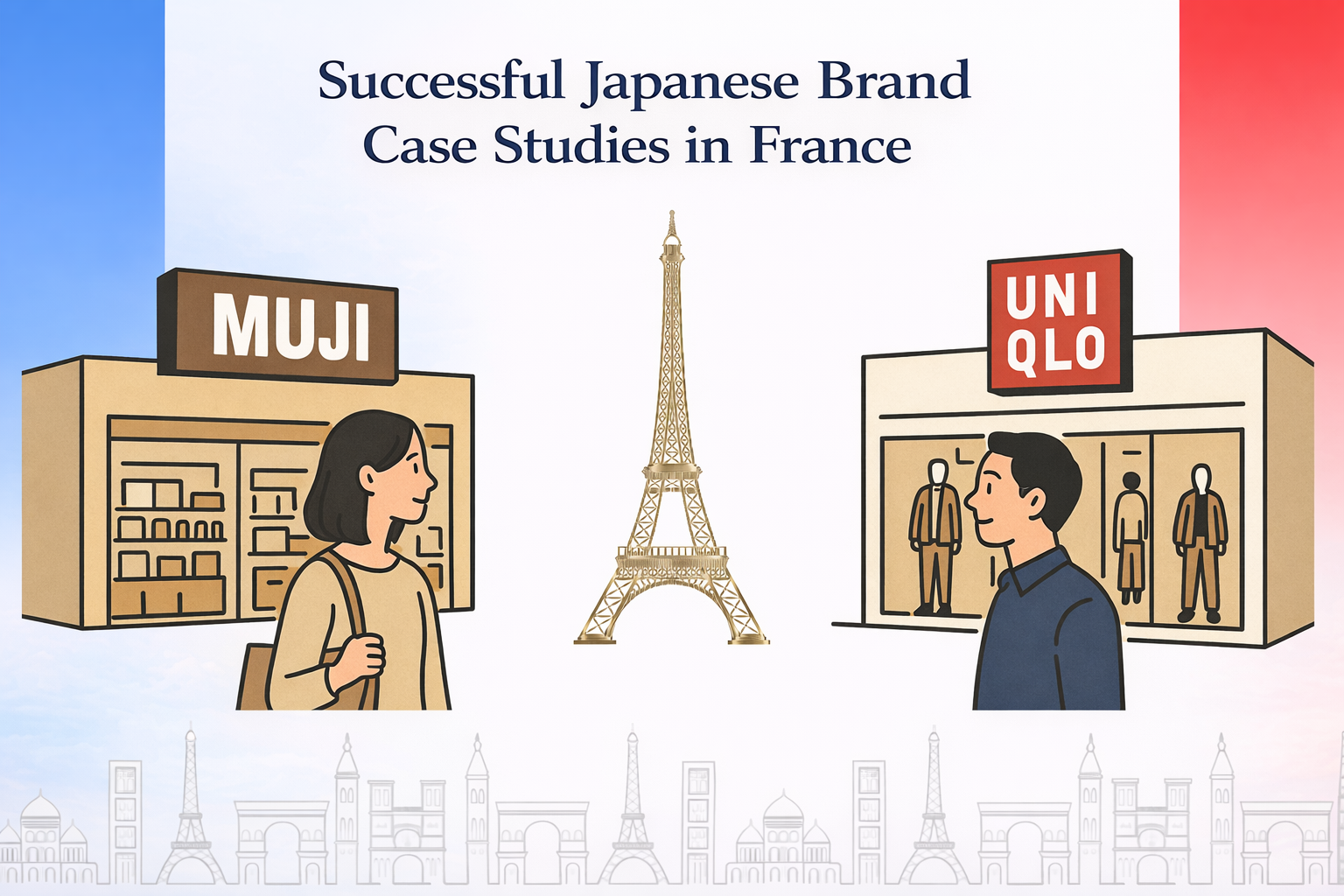
The Japanese brand, which understood the characteristics of the French market and was able to demonstrate its strengths according to the local area, has achieved solid results. Typical examples include Muji Ryohin and UNIQLO.
First, Muji (Muji) won the hearts of French consumers with its simple and functional design. The company, which handles a wide range of products from daily necessities to furniture and clothing, proposes a style that comfortably arranges living spaces with a “subtraction design” that excludes flashiness.
The wide and open store design and easy-to-use website also matched the French lifestyle. In particular, consumers in urban areas appreciate the minimalistic aesthetic sense of eliminating waste, and accept Muji Ryohin as a “symbol of a clean and efficient lifestyle.” As a result, MUJI is more than just a retail brand; it is becoming an entity that shapes the standard of living and interior design in France.
Meanwhile, Uniqlo (Uniqlo) achieved success with its strategy of “providing high quality, basic clothing at an affordable price.” By setting up a flagship store in an upscale area of Paris, we have strengthened our position as “fashion that enriches everyday life” rather than just a low-cost brand.
The concept of “lifewear” resonated with French consumers seeking simple yet sophisticated designs while emphasizing comfort and durability. Basic items that are not influenced by trends are in line with France's “long-time favorite culture,” creating a structure that makes it easy to acquire repeat customers.
What can be read from this case from the past is that in order for Japanese brands to succeed in the French market, “reliability, simplicity, and long-term value” are more important than “eccentricity.”
Both Muji Ryohin and UNIQLO brought high quality and careful consideration, which are Japan's unique strengths, to the forefront while implementing store strategies and branding tailored to the local area. As a result, it has been recognized by French consumers as “an entity that enriches our lifestyle,” and it has been gathering support for a long time.
In other words, it can be said that providing products and services that are rooted as staples rather than following short-term trends is a shortcut to success in the French market.
The most important thing in understanding the French market is a consumer culture that “emphasizes reliable staples rather than newness.” In Japan, the method of attracting attention by introducing new products one after another is the mainstream, but in France, there is a strong trend where products that have been accepted once continue to be loved for a long time.
Consumers find value in an “unchanging sense of security” so that customers are not interrupted even if long-established bakeries continue to provide the same products for 10 years or more.
This characteristic is also a major advantage for Japanese companies entering the market. This is because even if advertising costs and development costs are not frequently applied, there is a possibility that the product itself will continue to sell over a long period of time if the degree of perfection of the product itself is high. In other words, rather than aiming for short-term trends, providing “products and services that can be nurtured over time and built up trust” is a shortcut to success.
For Japanese companies considering expanding into France, understanding this “standard culture” is the biggest hint.
Honest quality over glamorous promotions, consistent value over flashy replacements. In order to achieve results in the French market, it is essential to develop a strategy that captures this essence.
For inquiries about expanding into France or local marketing strategies, please contact us.